Consulting and Definition
We analyze and define requirements against real business goals.
Nearshore custom web and mobile app development for US companies: native, hybrid, and web apps shipped to production every week, in your time zone.
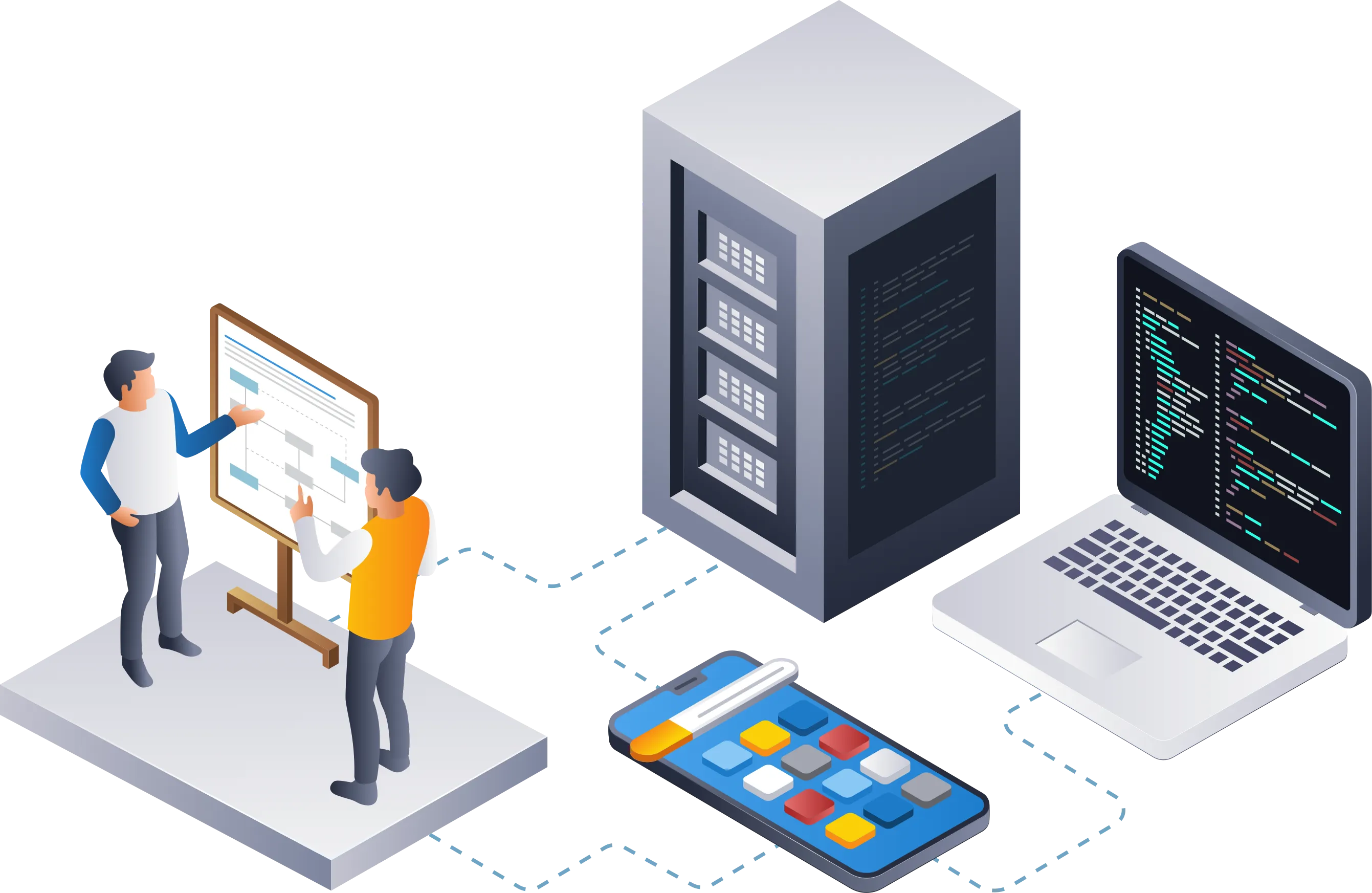
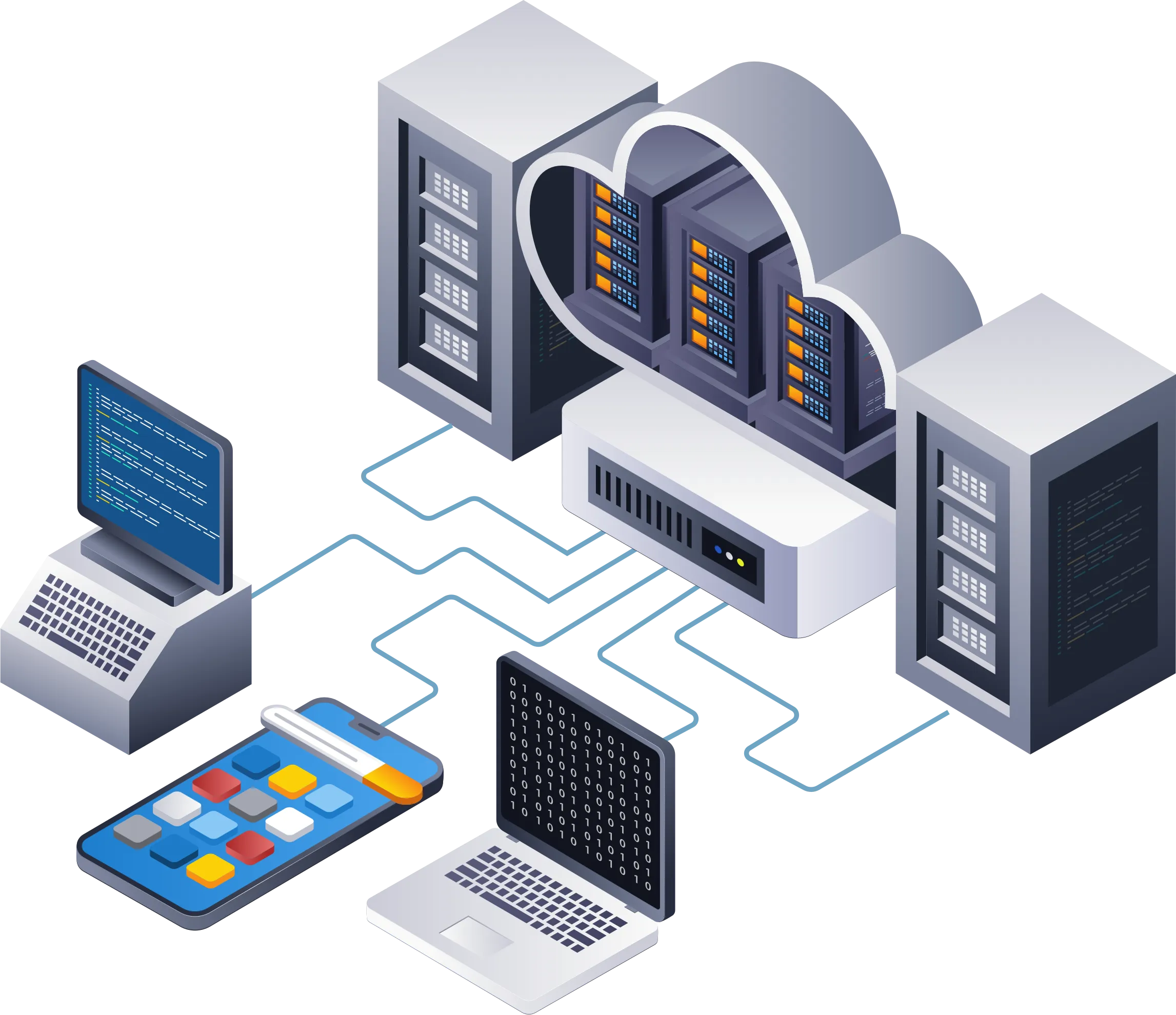
At Fuix, we design and build custom web and mobile app development for companies and startups. We use a modern stack and agile delivery to ship high-performance products your users actually rely on. We work as your external technical team, with a single technical owner and weekly releases to production — real functionality, not demos.
Mobile applications
Native (Android, iOS) and hybrid apps with Flutter or React Native.
Web applications
SPAs, PWAs, and dashboards with Vue.js, React, or Angular.
Enterprise software
ERP systems, CRM, and process automation.
APIs and integrations
REST, GraphQL, and third-party integrations.
No Code / Low Code
Solutions that don't require advanced programming.
We analyze and define requirements against real business goals.
We prototype user experience and interface before writing code.
Iterative construction with weekly releases to production.
We verify functionality, security, and performance before every release.
App Store / Play Store publication and continuous support.
Custom web and mobile app development means building the product your business and your users actually need, instead of forcing your process into a template. Whether it’s a customer-facing mobile app, an internal operations dashboard, or a web platform that has to scale, the difference between a product that works and one that frustrates people is in the details — performance, reliability, and a design that matches how people really use it.
At Fuix we build web and mobile apps on a modern stack — React, Vue, and Angular on the web; React Native and Flutter on mobile; native Kotlin and Swift when the case calls for it. We’re a dedicated nearshore team based in Chile working US business hours, so you get senior delivery and real-time collaboration without building an in-house department or waiting on a distant offshore vendor.
Good apps come from getting three things right. Clear definition: we start by turning your idea into concrete requirements tied to business goals, so we build what matters and skip what doesn’t. Design before code: we prototype the experience and interface first, because fixing a screen in a wireframe costs minutes and fixing it in production costs weeks. Quality at every release: functionality, security, and performance are verified before anything ships.
Most apps don’t live alone. We build the APIs and integrations — REST and GraphQL — that connect your app to the ERP, CRM, payment providers, and third-party services it depends on, so data flows once and stays consistent.
Mobile app development comes with decisions the web doesn’t: choosing between native (Swift, Kotlin) or cross-platform (React Native, Flutter), publishing to the App Store and Google Play, handling push notifications, offline support and frictionless updates. We build custom mobile apps that talk to your existing systems —your ERP, your backend or your APIs— so the data is the same on the phone and in the office. If you’re not sure whether you need a native app or a PWA will do, that’s part of what we settle in the diagnostic.
We ship to production every week with a single technical owner accountable for delivery. You get real, usable functionality each week, not demos or staging previews. Before each release the full flow is validated end-to-end; if it fails, it doesn’t ship, and you get full traceability of what changed. We use AI internally to accelerate development and review code — that’s how we sustain the weekly cadence without cutting corners.
Pricing is a fixed monthly fee by scope, not by the hour, so cost is predictable and our incentives are aligned with your outcome. We operate from Chile as a nearshore partner for US companies, overlapping your business hours end to end.
Most providers won’t publish a number. Here are ours, in USD, for a senior Chilean team working US hours:
| App type | What it includes | Range (USD) |
|---|---|---|
| Simple / MVP | One platform or cross-platform, core features, a light backend, minimal back-office | 8,000 – 15,000 |
| Mid-tier | iOS + Android, login, payments, push notifications, one integration with an existing system | 15,000 – 30,000 |
| Complex | Real-time, offline sync, multiple integrations, high user volume | 30,000 – 60,000+ |
| Dedicated team | Monthly fee for a team that ships continuously, 6-month minimum | 4,500 – 6,000/month |
Those are fixed-scope bands: you define what gets built, the amount is agreed, and that’s the amount. The dedicated team makes more sense when the product will keep growing and you’d rather reorder priorities than renegotiate every change. QA, store publishing and deployment are inside the price in both models — we don’t bill them as extras. What moves you between bands is broken down in how much it costs to build an app in Chile.
The first conversation is free, runs in your time zone, and ends with a concrete next step. If you have an app to build or one that stopped keeping pace with your users, let’s scope it together. Book a call and leave with a clear plan.